




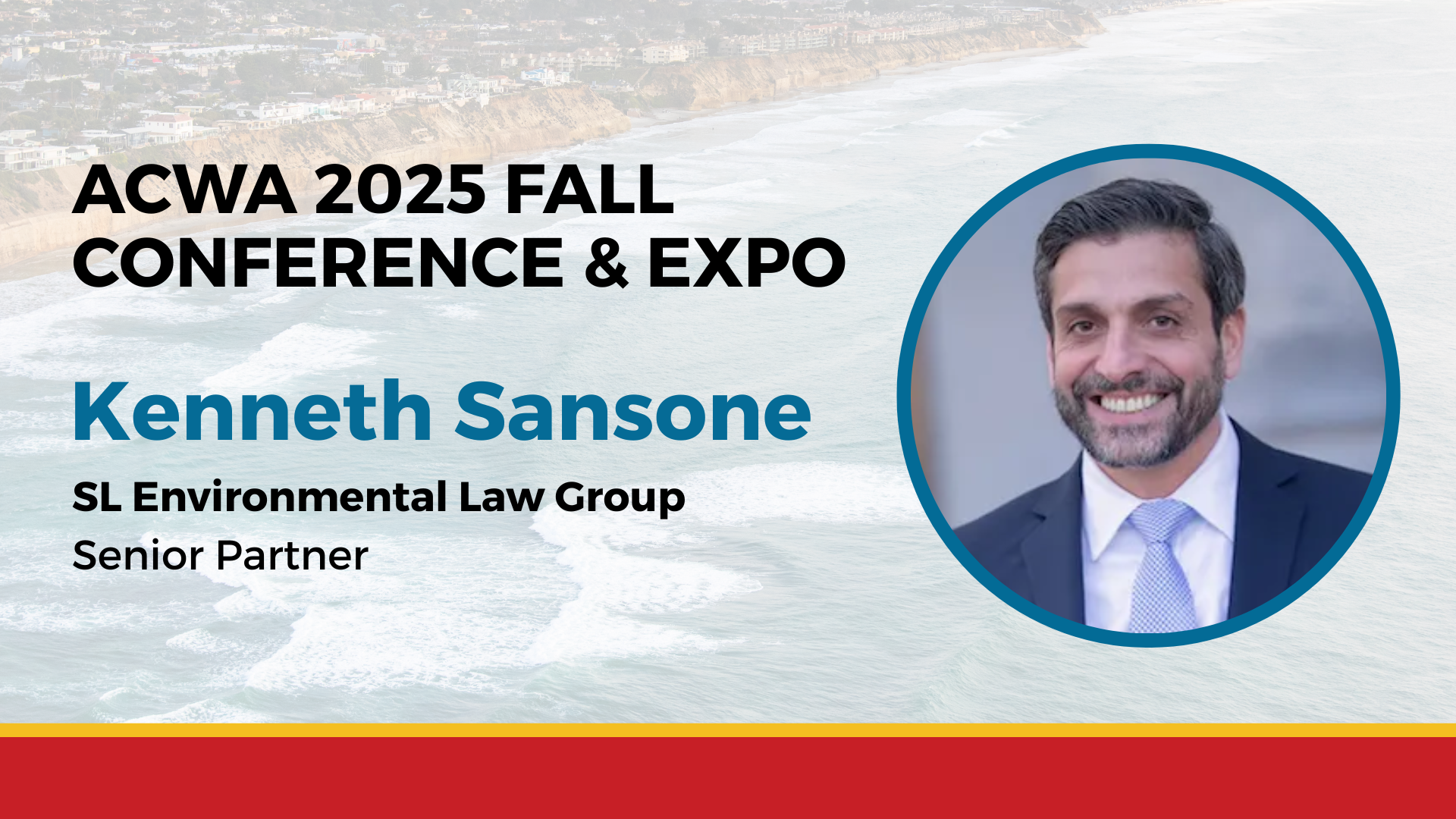
 For many California municipalities and water utilities, PFAS detections and shifting regulations have led to increased costs and challenges in recent years. To help share expertise and resources, the Attorney Program at this year’s Association of California Water Agencies (ACWA) Fall Conference will bring together experts in the field to provide a comprehensive update on PFAS for water agencies. The session, titled The PFAStrophe: A Legal Overview on What’s New in PFAS Regulation, Legislation, and Litigation, is designed for water attorneys and water resource managers seeking to guide their agencies through complex legal and financial challenges caused by PFAS. As a panelist, SL Environmental Law Group Senior Partner Ken Sansone will discuss the ongoing multidistrict litigation against PFAS manufacturers, which has led to historic settlements for drinking water systems nationwide. Ken will also share crucial next steps water agencies eligible for the second phase of the settlements must take to avoid missing their chance to recover funds, as well as opportunities to seek additional funding through litigation over PFAS at wastewater treatment facilities.
The panel will be moderated by Claire Collins, partner at Hanson Bridgett. Additional panelists include Steve Cole, Assistant General Manager at Santa Clarita Valley Water District, and Andrew Gagen, Managing Partner at Kidman Gagen Law. Panelists will address the potential exposure that water agencies may face with PFAS detections and provide an overview of both litigation and non-litigation funding sources for cleanup efforts.
The 3M and DuPont drinking water settlements offer a combined total of up to more than $14 billion to public water providers that have detected PFAS in their drinking water sources. This not only marks a major step towards financial relief for utilities and local governments facing costs for PFAS contamination, but, since the use of settlement funds is not restricted, it may also help close other funding gaps.
While the first participants in the 3M and DuPont PFAS drinking water settlements are already receiving payments of up to 8 or 9 figures, water agencies that did not detect PFAS in their water supplies until after the June 2023 settlement announcements remain eligible to receive funding through Phase 2 of the process. Those hoping to receive payments through the settlements should start working through the steps below as soon as possible to avoid leaving potential funding on the table.
Missed Deadlines Can Mean Missed Funding Opportunities
While all eligible public water systems were automatically included in the settlements unless they formally opted out by the 2023 deadlines, recovering funds is not automatic. Water utilities that did not opt out of the settlements but miss testing and filing deadlines will be ineligible to recover any funds at all through the settlements, and they will have forfeited their right to file future lawsuits against 3M and DuPont over PFAS drinking water contamination.
Steps to Take Now to Optimize Recovery and Avoid Missed Deadlines:
- Test for PFAS at each individual wellhead or surface water intake: This was not required for UCMR5.
- Complete testing by the end of 2025 to request reimbursement for testing costs: If seeking reimbursement, the deadline is approaching.
- Consider Special Needs Fund claims: Systems can seek additional funding to reimburse PFAS management expenses incurred before Aug. 1st, 2026.
- Prepare for mid-2026 Action Fund deadlines: Comprehensive planning, data, and documentation are needed to receive funding.
California Cities Receiving Significant PFAS Recoveries
City of Corona
The City of Corona, CA, faced PFAS contamination in its groundwater and acted quickly, utilizing costly advanced treatment and blending systems to provide safe drinking water. To avoid placing the financial burden on residents, the city pursued legal action against polluting manufacturers. That effort succeeded: In 2025, Corona received its first payment from the 3M PFAS drinking water settlement, with more disbursements expected in the future, for a total recovery exceeding $21 million from 3M alone. The city also anticipates additional funds from other PFAS manufacturers.
City of Sacramento
With support from SL Environmental Law Group, the City of Sacramento, CA, secured approximately $10.4 million through the PFAS drinking water settlements. The city also preserved its rights to file additional claims if PFAS is found in more wells or at higher levels in the months and years ahead—an important safeguard achieved through additional documentation. These actions provide significant funds to offset PFAS treatment or other capital costs while protecting ratepayers from potential future expenses.
Don’t Miss Your Chance to Learn from Attorneys Experienced in PFAS Issues
This session will equip attendees with the tools they need to help their agencies tackle PFAS challenges, secure funding, and protect their communities from the public health and financial impacts contamination. Register today to reserve your seat—we hope to see you there!
Session Details
Title: The PFAStrophe: A Legal Overview on What’s New in PFAS Regulation, Legislation, and Litigation
Date: Wednesday, December 3, 2025
Time: 10:30 a.m. – 11:45 a.m.
Continuing Education Credits: This program has been approved by the State Bar of California for attorneys to receive general MCLE credits. This program also qualifies for 1.25 hours of drinking water credit approved by the State Water Resources Control Board.