




 Today’s U.S. Department of Justice (DOJ) $77 million lawsuit against Southern California Edison (SCE) for its alleged negligence in the Eaton and Fairview Fires highlights the obvious risks that are fueling California’s wildfires: overhead transmission lines. The latest suit by Acting U.S. Attorney Bill A. Essayli has reignited the fears of the small equestrian community of Norco, located in Riverside County—in between the two areas devastated by these wildfires—who is trying to seek a safer underground solution for a proposed overhead transmission line project in their own wind- and wildfire-prone backyard.
Since 2017, the City of Norco has opposed the Riverside Transmission Reliability Project (RTRP), a joint project between SCE and Riverside Public Utilities. The project would bring a new 230,000-volt (230kV) electric transmission line to provide a second connection for the City of Riverside to California’s electric grid. While sections of the project are being constructed underground nearby, SCE plans to build an overhead transmission line in Norco, through one of the region’s most fire- and wind-prone areas along the Santa Ana Riverbed.
“SCE and Riverside need to heed the warning of this lawsuit addressing SCE’s alleged responsibility for devastating wildfires triggered by major overhead transmission lines,” said Mayor Greg Newton. “We continue to see above-ground transmission lines lead to destructive and deadly wildfires in communities just like Norco. It is the definition of insanity to repeat the errors of the past and expect a different outcome.”
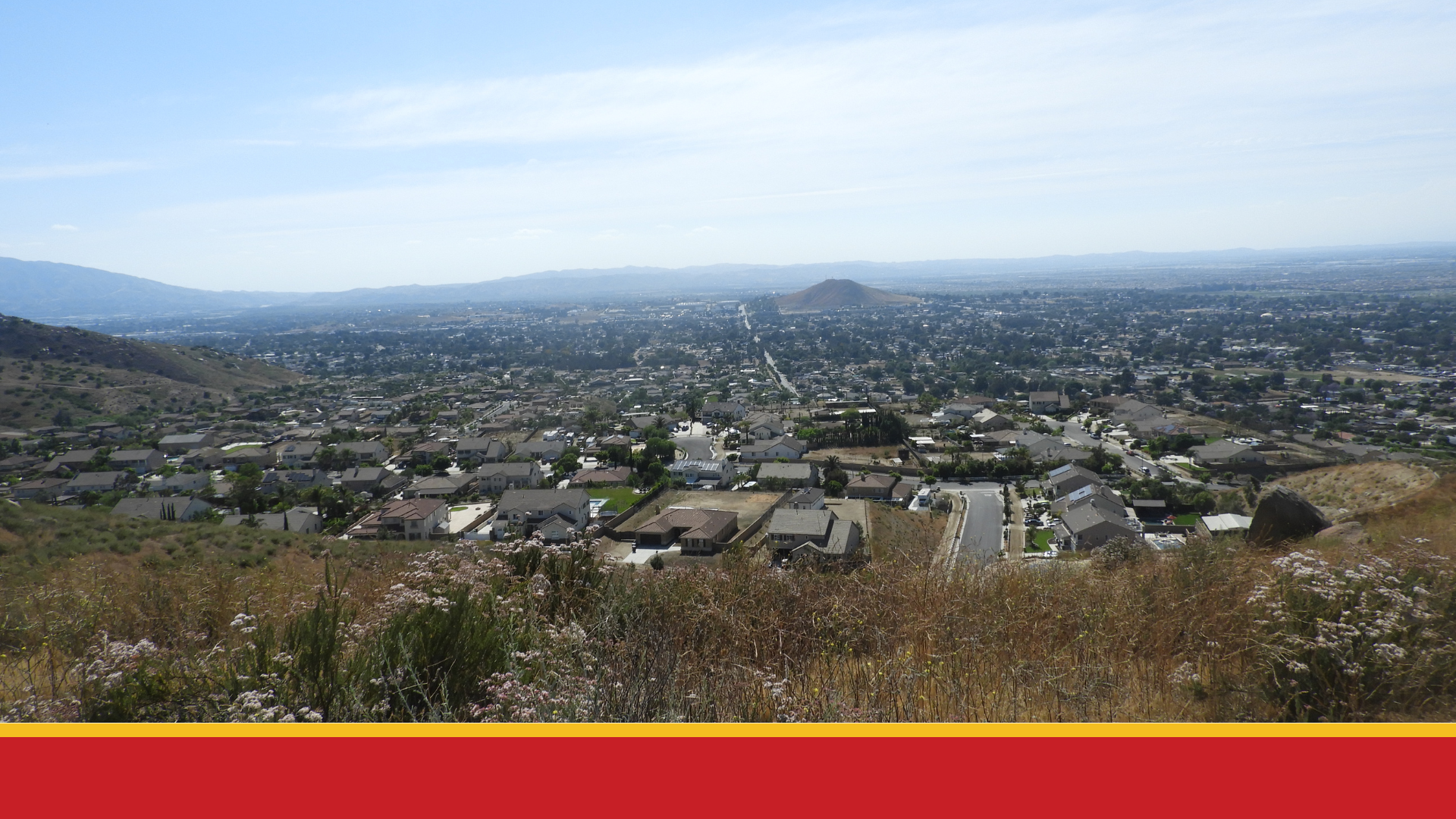
The proposed high-voltage transmission line route, which is similar to the transmission system under investigation as the potential cause of the Eaton Fire, runs through the same location where the 180-acre Mann Fire (a winddriven brush fire on the Santa Ana Riverbed) originated in 2020, that caused severe damage to homes and property, and threatened animal safety. Residents, fire experts and City officials have warned the California Public Utilities Commission (CPUC), SCE and Riverside that building such a massive overhead transmission project in the same highly flammable vegetation-ridden corridor will inevitably spark another, even larger, catastrophic wildfire.

“The Norco City Council, our legislators and our residents have been requesting, petitioning and begging the CPUC and SCE to put these lines underground for nearly a decade, but they’ve repeatedly ignored us,” said Council Member Kevin Bash. “Despite our efforts, it seems they are not prioritizing the safety of our community.”
Fire officials have informed that the approximate 120-foot-tall (minimum) overhead transmission lines, which have been known to cause conflagrations that destroyed communities, will limit firefighting capabilities and prevent air support in an area where high winds already make ground firefighting difficult and, at times, impossible. Additionally, evacuations in Norco are complicated by the Santa Ana River blocking escape routes to the north, hills to the east, narrow streets, and the many horses and animals that also need evacuation.
“After witnessing the tragic wildfires around us, we’re very concerned that our community will be the next headline. The additional steps to underground this project won’t compare to the devastation that follows a preventable catastrophe,” said Mayor Newton. “The safest alternative to stop the fires is to bury the wires. There is still time for SCE, the CPUC or Riverside to do the right thing.”